
Passed a 20/20 Vision Test But Still Struggling? Why Traditional Eye Exams Might Miss Binocular Vision Dysfunction

Passed a 20/20 Vision Test But Still Struggling? Why Traditional Eye Exams Might Miss Binocular Vision Dysfunction

Passed a 20/20 Vision Test But Still Struggling? Why Traditional Eye Exams Might Miss Binocular Vision Dysfunction

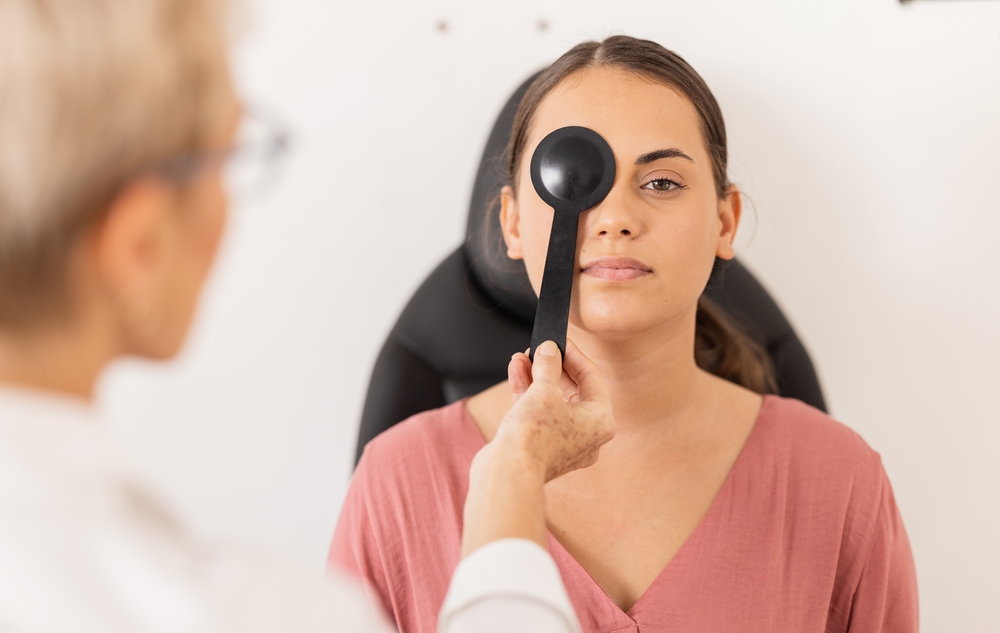
Seeing 20/20 does not always mean your visual system is working comfortably. You may be able to read every letter on an eye chart and still experience headaches, dizziness, eye strain, difficulty reading, or discomfort while driving. In some cases, these symptoms may be connected to Binocular Vision Dysfunction (BVD), a condition involving how well the eyes work together as a team. At Eversee Boutique Eyecare, we look beyond visual sharpness to understand how your eyes and brain coordinate throughout everyday activities.
Why 20/20 Vision Does Not Tell the Whole Story
A traditional vision test measures visual acuity, or how clearly you can see letters and objects at a specific distance. This is important, but clarity is only one part of healthy, comfortable vision.
Your eyes must also align, focus, track, and work together to create a single image. When the eyes are slightly misaligned, the brain may have to work harder to combine the images from each eye. This can contribute to symptoms even when each eye individually achieves 20/20 vision.
What Is Binocular Vision Dysfunction?
Binocular Vision Dysfunction occurs when the eyes are not properly aligned with one another. Even a small misalignment can place extra demand on the visual system as the brain continually tries to compensate.
Because BVD symptoms can overlap with other problems, patients may not immediately connect what they are experiencing with their vision. Symptoms can include:
• Frequent headaches or migraines
• Dizziness or motion sickness
• Eye strain and visual fatigue
• Difficulty reading or concentrating
• Poor depth perception
• Neck or shoulder discomfort
• Anxiety or discomfort while driving
• Double vision or trouble tracking words
These symptoms can interfere with school, work, driving, reading, and other everyday activities.
Why A Routine Eye Exam May Miss BVD
Standard eye exams play an important role in assessing eye health and vision, but BVD requires a closer evaluation of binocular function. A patient can have excellent visual acuity while still struggling with eye teaming, tracking, focusing, or alignment.
Taking A Closer Look With A Comprehensive NeuroVisual™ Exam
At Eversee Boutique Eyecare, we provide a comprehensive NeuroVisual™ Exam for patients whose symptoms may be related to BVD. This specialized evaluation goes beyond standard vision testing to examine how the eyes and visual system function together.
The exam can assess areas such as eye movement, eye teaming and tracking, focusing, binocular fusion, convergence, depth perception, posture, balance, and visual-spatial awareness. This detailed approach helps identify subtle visual misalignments that may not appear during a routine examination.
When BVD is identified, treatment may include customized microprism lenses designed to help the eyes work together more comfortably and reduce the strain placed on the visual system.
Schedule a comprehensive NeuroVisual™ Exam with Eversee Boutique Eyecare to uncover subtle vision misalignments that may be contributing to headaches, dizziness, eye strain, reading difficulties, or other persistent symptoms. Contact our office in Winnetka, IL, by calling (847) 386-9045 to book an appointment.


STORE HOURS
| Monday | 9:30 AM to 5:30 PM |
| Tuesday | 9:00 AM to 4:00 PM |
| Wednesday | 9:30 AM to 5:00 PM |
| Thursday | 9:30 AM to 5:00 PM |
| Friday | 9:30 AM to 4:00 PM |
| Saturday | Closed |
| Sunday | Closed |
| *Private appointments may be requested outside of listed hours- call to book | |
© 2026 Eversee Boutique Eyecare - All Rights Reserved - Accessibility Statement - SMS ToS - Privacy Policy - Sitemap
Powered by 